Is Your Cooking Water Truly Clean?
Feb 26, 2026A Question Most People Never Ask
In modern kitchens, people pay increasing attention to what they eat. We care about ingredient origins, organic labels, and nutritional balance—yet rarely stop to ask a more fundamental question: Is the water we cook with truly clean and safe for long-term use?
From cooking rice and soups to brewing coffee and tea, water is involved in nearly every meal. It is not just a cooking medium but a core component of what we consume daily. Overlooking cooking water quality often means overlooking one of the most essential foundations of healthy eating.
Why Cooking Water Quality Matters More Than You Think
Many people assume that boiling water automatically makes it safe. In reality, boiling has clear limitations. While it may reduce certain microbial risks, it does not remove dissolved chemical contaminants.
Tap water can contain heavy metals, disinfectant residues, total dissolved solids (TDS), and persistent organic compounds. These substances do not disappear when heated and can continue to affect the taste, aroma, and long-term safety of cooked food.
Clean cooking water is therefore not just about better taste—it plays a direct role in food quality and everyday health.
Common but Overlooked Contaminants in Tap Water
Across the globe, most municipal tap water undergoes basic treatment, but “meeting standards” does not always mean “ideal.” Water quality can still be affected during transportation and daily use.
Common concerns include chlorine-related taste and odor, lead and heavy metals from aging pipes, sediment and rust, and dissolved salts. In recent years, persistent compounds such as PFOS and PFBS have also drawn attention due to their stability and resistance to breakdown.
This has led more consumers to ask an important question: Is tap water truly safe for everyday cooking?
The Limits of Boiling Water
Boiling water has long been viewed as a simple purification method, but it is better suited as a temporary measure rather than a long-term solution. It does not reduce TDS, remove heavy metals, or improve taste and odor.
For households seeking consistent water quality and long-term peace of mind, deeply filtered water—especially RO-filtered water—has become a more dependable choice. This explains the growing global adoption of filtered water for cooking.
Filtered Water Makes a Difference Beyond Taste
When people switch to filtered water for cooking, taste is often the first noticeable change. Over time, however, the benefits extend beyond flavor to consistency and confidence.
Filtered water allows ingredients to shine naturally, produces more stable results in soups and beverages, and makes cooking outcomes easier to control. For quality-conscious households, a kitchen water filtration system is increasingly seen as part of everyday living rather than an added luxury.
What Defines a Water Filtration System Suitable for Cooking
Not every countertop water dispenser is designed with cooking in mind. A countertop RO water dispenser suitable for the kitchen must balance filtration performance, flow stability, and user convenience.
Multi-stage filtration combined with a high-quality RO membrane ensures deep purification, while stable output and water-saving design make it practical for daily use. Ease of installation and maintenance ultimately determines whether a system truly fits into a home kitchen.
| Feature | Conventional Water Purifier | Countertop RO Water Dispenser (PU-T01) |
| Filtration Technology | Basic carbon or composite filtration | Reverse Osmosis (RO) filtration for deeper purification |
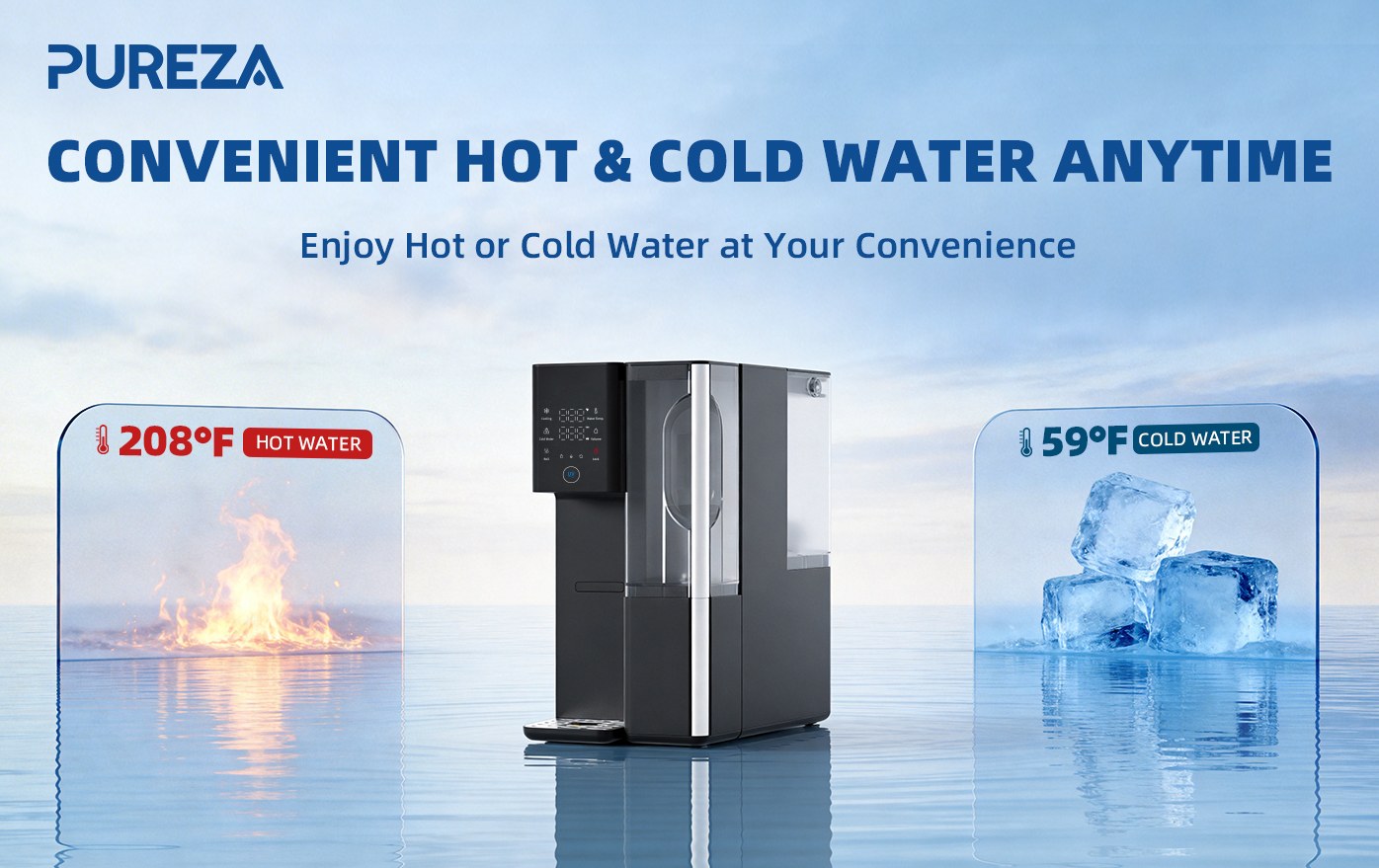
| Water Output Options | Typically room-temperature water | Hot & cold water from one compact unit |
| Temperature Control | Not available or limited | Precise temperature control for daily drinking needs |
| Pure-to-Drain Ratio | Lower efficiency, more wastewater | 3:1 pure-to-waste ratio for water savings |
| Water Flow Rate | Moderate | High flow rate for smoother, continuous dispensing |
| Design Approach | Function-oriented | Compact countertop design with premium appearance |
| Filter Replacement Cycle | Shorter replacement intervals | Up to 18 months recommended replacement cycle |
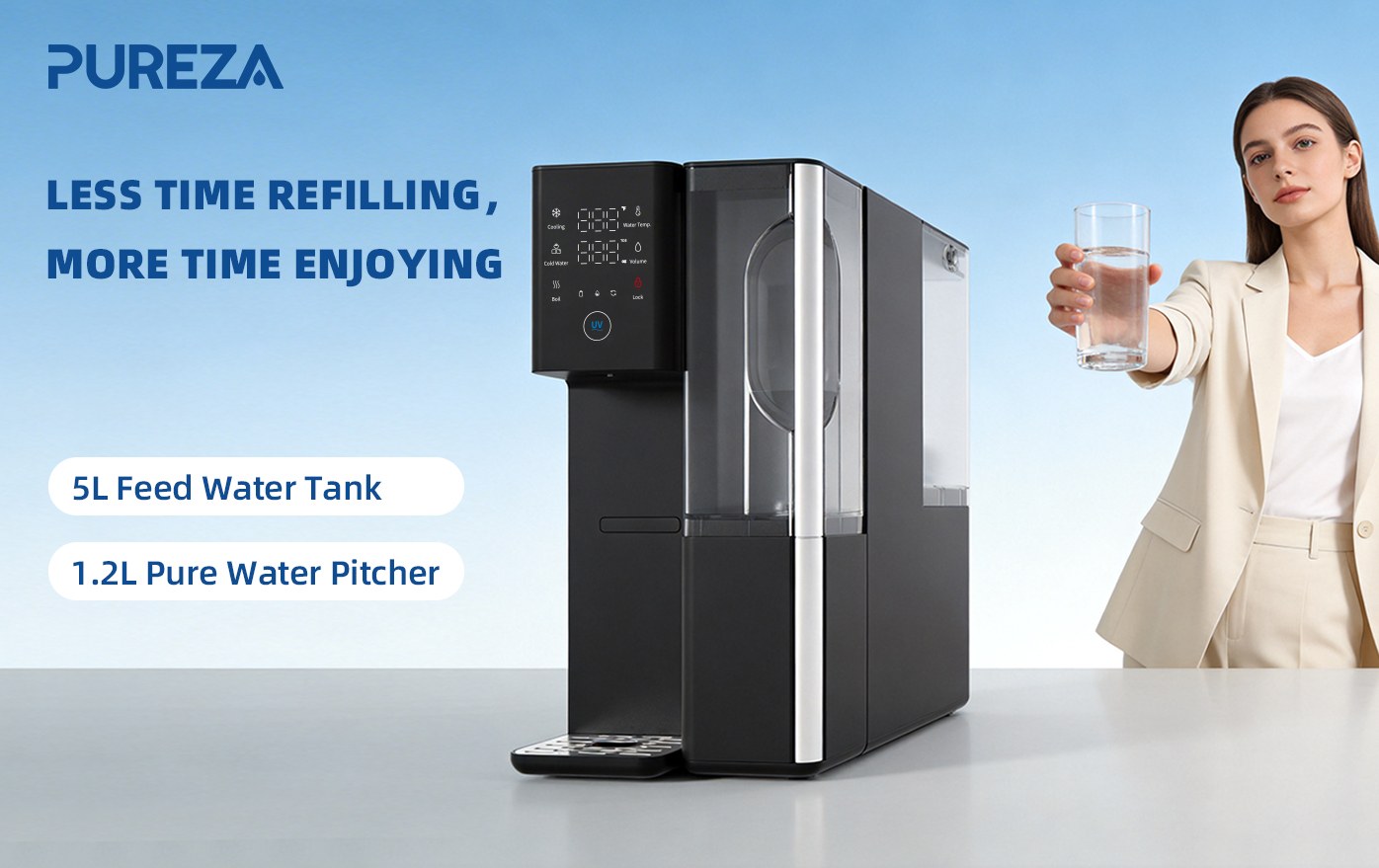
PU-T01 Countertop RO Water Dispenser: Designed for the Kitchen
The PU-T01 Countertop RO Water Dispenser was developed with these exact requirements in mind. Its five-stage filtration system, paired with a 0.00001-micron RO membrane, effectively reduces TDS, PFOS, PFBS, chlorine, salts, sediment, lead, and unwanted odors.
Compared with traditional RO systems, the PU-T01 features a 3:1 pure-to-drain water ratio, significantly reducing water waste. Integrated hot and cold water dispensing, along with six temperature settings and four volume options, makes both cooking and drinking more efficient and flexible.
In addition, OEM and ODM packaging customization support makes the PU-T01 cooling and heating RO water purifier suitable for brand partnerships and diverse market needs.
Clean Ingredients Start with Clean Water
We often say great meals start with quality ingredients. Yet in everyday cooking, the most frequently used element is also the most overlooked: water.
Choosing cleaner, more consistent water is not just about flavor—it lays the foundation for every meal. Clean water isn’t an upgrade; it’s where better cooking truly begins.